Q4 2026 Banquet Chair Procurement Guide: The Timeline That Gets Your Order There Before Christmas
Why your Q4 banquet chair order should have been placed yesterday
Every year we watch the same thing happen. A hotel or event rental company calls in late November, needs 800 banquet chairs before Christmas, and discovers the factory floor is already booked solid until January. They had the same needs in September, but the order sat in someone’s inbox while “Q4 season” quietly became “too late season.”
Q4 is when banquet seating demand peaks: Thanksgiving dinners, company year-end parties, wedding season in warmer markets, and the December rush that fills every hotel ballroom on the same three weekends. Chinese factories hit their production ceiling during these months, and lead times stretch exactly when you need them shortest.
This guide is the timeline and spec sheet we wish every buyer saw before calling. It is written for hotels, event companies, catering contractors, and furniture importers planning fourth-quarter seating — and it works the same whether you need 100 chairs or 2,000.
1. The 2026 deadline calendar: work backward from the event
Start from the date the chairs must be in your warehouse, then subtract. Here is the realistic math for orders from a Chinese factory:
- Production (standard catalog models): 15–25 days after sample approval.
- Production (custom color, fabric, or logo): 30–45 days. Customization eats the window, not the freight.
- Sea freight to the US West Coast: 25–30 days door-to-door, including customs.
- Sea freight to the US East Coast or Europe: 35–45 days door-to-door.
- Buffer for inspections, delays, and loading slips: add 10 days. Always.
Work it backwards for a Christmas event on December 20:
- Chairs must ship by: October 20 (East Coast) or November 5 (West Coast)
- Production must finish by: late September to mid-October
- Your PO and deposit should land: the first two weeks of September
If you are ordering custom upholstery or a logo plate for Q4, the realistic cut-off is the last week of September. After mid-October, even standard models ship on a best-effort basis. This is not pressure selling — it is the same math every factory works with, and the factories that promise otherwise are usually quoting off a schedule they do not control.
2. The specs that separate a commercial chair from a cheap import
Price per unit is the wrong first question for banquet seating. Chairs at a wedding are stacked six high after dinner, moved by staff in a hurry, and sat on by guests who are not gentle. The right questions are about the standards behind the chair:
- Test standard: European buyers should ask for EN 16139 (strength, durability and safety for non-domestic seating) — note that EN 12520 is the domestic standard and is a step below. US buyers should ask whether the chair meets BIFMA X5.1 load requirements.
- Static load rating: commercial-grade chairs should hold 130 kg (287 lb) or more. Ask for the test report, not just the claim.
- Stacking: how many high, and are there glides so stacked chairs do not scratch frames? A banquet chair that stacks 8–10 high turns a storage closet into usable space.
- Frame and finish: steel tube at least 1.0–1.2 mm wall thickness, powder-coated at 60–80 microns. The finish fails at the feet and armrests first — inspect those joints.
- Upholstery: for fabric seats, look for Martindale abrasion above 30,000 cycles and foam density of 35–45 kg/m³. For foam-backed vinyl, check it is commercial grade, not the stuff that cracks after one winter.
- Fire safety: if your market requires it, confirm compliance with California TB 117-2013 (US) or BS 5852 / EN 1021 (UK and EU) before committing to a fabric.
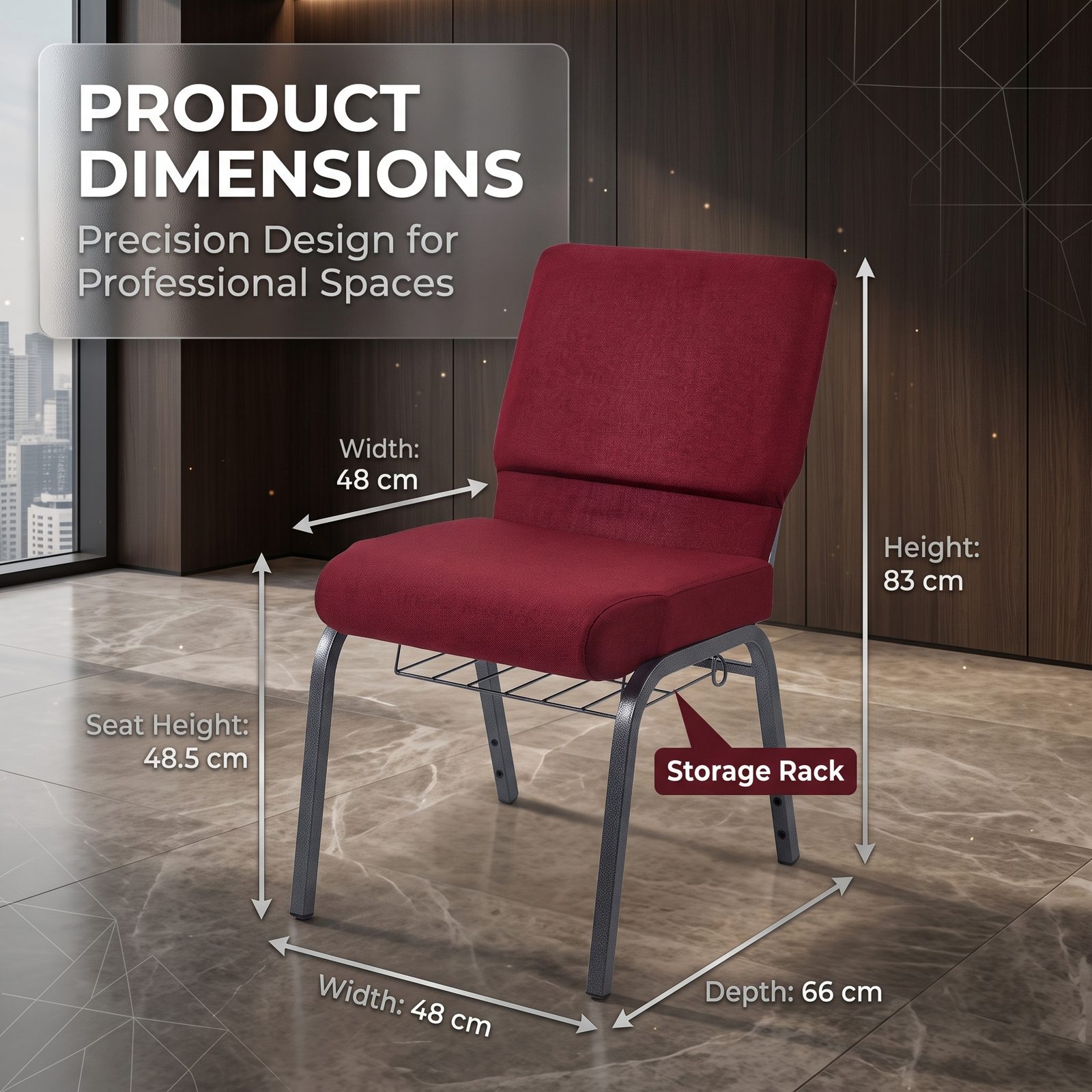
Our C-601 and C-605 padded banquet chairs are typical of what we ship for hotels: 1.0 mm steel frames, 8–10 high stacking, and load-tested construction. The C-607 is the budget-conscious version of the same family. If you are sourcing for a project where every kilo of freight matters, the aluminum C-614 cuts weight without giving up stackability.
3. Customization: what is worth paying for in Q4
Custom work is where Q4 orders die, so spend it wisely:
- Worth it: a logo on the backrest (embroidered or plate), a fabric color that matches your brand, and wood seat tones (walnut, oak, birch) that fit the venue. These sell the chair again and again.
- Worth it only with time: custom foam shapes, bespoke metal colors, or a completely new frame design. Anything that requires new tooling or a new sample round adds 2–4 weeks minimum.
- Not worth it in Q4: chasing a Pantone color through three sample rounds while the freight window closes. Lock the custom details in September, or run standard finishes and upgrade next season.
One practical tip from the factory floor: if you are ordering custom colors, order two spare finished samples per color in the same production run. Reordering a color later means a whole new batch, but a spare sample lets you match shades across seasons and future orders.
4. Freight, packing, and what the quote actually includes
FOB quotes confuse more Q4 budgets than anything else. When a factory quotes FOB, it covers the chair, standard export packing, and delivery to the port — nothing after that. Your real landed cost includes:
- Ocean freight (which rises sharply from October as the holiday rush loads the lanes)
- Destination handling, customs, and duties
- Inland delivery from the port to your warehouse
Packing is the hidden variable. Stackable banquet chairs are usually bundled 4–6 to a carton or shrink-wrapped on pallets. The better the packing plan, the more chairs fit a container: a 40 ft high-cube typically takes roughly 1,200–2,000 stackable banquet chairs, depending on the model and packaging. Ask the factory for a loading plan before you order — a good one should fit more chairs per container than you assumed, and that is worth more than a lower unit price.
If your Q4 order is small, consider grouping it with another project into a shared container. The per-unit freight saving is often 30–50% versus LCL (less than container load), and your chairs arrive on the same vessel anyway.
5. Four mistakes that sink Q4 banquet chair orders
- Ordering in November “because it is still November.” Sea freight from Asia to the US East Coast at year-end runs 5–6 weeks on a good week. November orders arrive in January. There is no exception to this.
- Comparing price without comparing test standards. A chair that fails EN 16139 load testing is not the same product at a lower price — it is a different product with the same photo.
- Skipping the sample round for custom work. A 45-day custom production run is a long time to discover the fabric color is wrong. Three days of sample checking saves a forty-day mistake.
- Forgetting the chairs after they arrive. Verify quantities at the dock, check a few units for finish and stacking, and photograph anything damaged within the claim window. Claim windows close fast, especially in Q4 when everyone is short-staffed.
6. What a realistic Q4 banquet chair budget looks like
Factory pricing for commercial banquet chairs, FOB China, generally falls into these bands:
- $15–$25: entry-level padded banquet chair, standard fabric and steel frame. Fine for one-off events, thin on durability for year-round use.
- $25–$45: the sweet spot for hotels and event companies: thicker steel, better foam, more finish options, real test documentation.
- $45–$70+: aluminum frames, premium fabrics, gold or custom finishes, and the kind of chair you see in flagship hotel ballrooms.
MOQ is usually 100–200 pieces per model for standard catalog items, or 50 pieces per model for custom orders. If a supplier quotes well below market with unlimited customization, ask what they removed from the test report to get there.
Quick pre-order checklist for Q4 seating
- Worked the timeline backward from the event date, with a 10-day buffer
- Confirmed EN 16139 / BIFMA test documentation, not just a claim
- Static load rating ≥ 130 kg
- Stacking height confirmed, with glides
- Frame wall thickness ≥ 1.0 mm; powder coat ≥ 60 microns
- Fabric Martindale ≥ 30,000 cycles; foam ≥ 35 kg/m³
- Fire compliance confirmed for your market (TB 117-2013 / BS 5852 / EN 1021)
- Custom details (color, logo, wood tone) locked before production starts
- Loading plan and container count in writing
- Inspection and claim window understood before the vessel sails
FAQ
When is the last date to order banquet chairs for Christmas delivery?
For US East Coast or Europe, your PO should be placed by the first two weeks of September for custom orders, and by early October for standard models. West Coast buyers have roughly two extra weeks. After mid-October, sea freight cannot reliably make a Christmas deadline.
What is the difference between EN 12520 and EN 16139?
EN 12520 covers strength and durability for domestic (home) seating. EN 16139 is the equivalent standard for non-domestic seating — hotels, restaurants, and events. It uses heavier loads and tougher durability cycles. Always ask for EN 16139 for commercial use.
How many stackable banquet chairs fit in a container?
Roughly 1,200–2,000 chairs in a 40 ft high-cube, depending on model and packing. Always request a loading plan from the factory before ordering — packing efficiency directly affects your freight cost per chair.
What is the typical MOQ for custom banquet chairs?
Standard catalog models usually start at 100–200 pieces per model. Custom colors, fabric, or logo work typically starts at 50 pieces per model, with a longer lead time.
Can I order banquet chairs in November for a January event?
Yes, and that is actually the better play. Late-November orders position production after the Q4 rush and often get better freight rates. If your event is in January or February, ordering in November can work well — just not for December events.
Need seating for your Q4 event or hotel project?
Browse our full Banquet & Hotel Chairs collection, or send us your event date, quantity, and any custom requirements. We will reply within 24 hours with a loading plan, FOB pricing, and an honest lead-time check against your date. If your date is already tight, we will tell you that too — and what we can actually deliver.