2026 Dining Chair Trends: Why Metal-Framed Upholstered Chairs Dominate This Year
The 2026 dining chair looks different — and it is engineered, not just styled
If you run a restaurant, cafe, hotel dining room, or contract furniture sourcing operation, you have probably noticed that the chairs landing in 2026 look different from the boxy wooden seats of a few years ago. The visual language has shifted toward curves, texture, and warmth — but underneath, the engineering story matters more than ever. Commercial spaces destroy residential-grade furniture. The chairs that survive a 100-covers-per-night service while still looking good on Instagram are almost always built on a metal skeleton.
This guide breaks down the five dining chair trends shaping 2026 hospitality projects, and explains why metal-framed upholstered chairs — the category Easy Furniture manufactures at scale in Shengfang, Hebei, one of northern China’s densest furniture production clusters — sit at the intersection of every one of them.
1. Mixed Materials: Metal Meets Upholstery
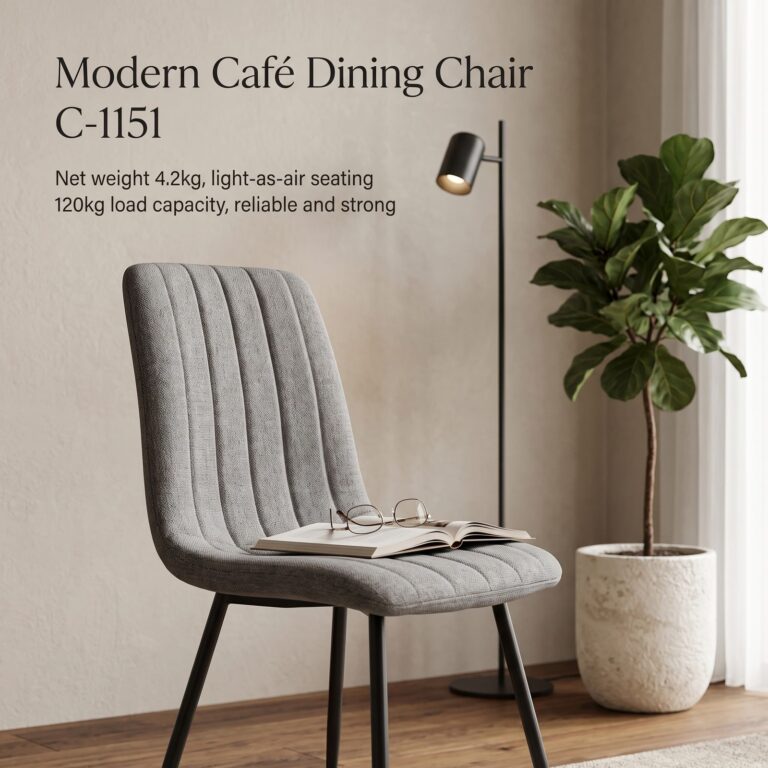
The single biggest dining chair trend of 2026 is the deliberate contrast of industrial metal and soft fabric. Designers are pairing powder-coated steel frames with upholstered seats and backs to create a look that reads as both “trendy industrial” and “approachable comfort.” This is not just an aesthetic choice — it is a procurement strategy. A metal frame delivers the structural longevity a busy venue needs, while the upholstery delivers the tactile warmth guests now expect after years of minimalism.
For operators, the practical upside is significant: when the fabric eventually wears, you reupholster the seat — you do not replace the chair. The frame, welded and powder-coated, keeps serving for years. This is the core logic behind our upholstered metal dining chair series, including the C-085 and C-090, where a welded steel skeleton carries a replaceable upholstered shell.
Buyer tip: When comparing suppliers, ask whether the upholstery is detachable. Chairs with bolt-on upholstered seats let you swap fabrics for a seasonal refresh without buying new inventory — a key advantage for multi-site operators.
2. Curved and Organic Silhouettes
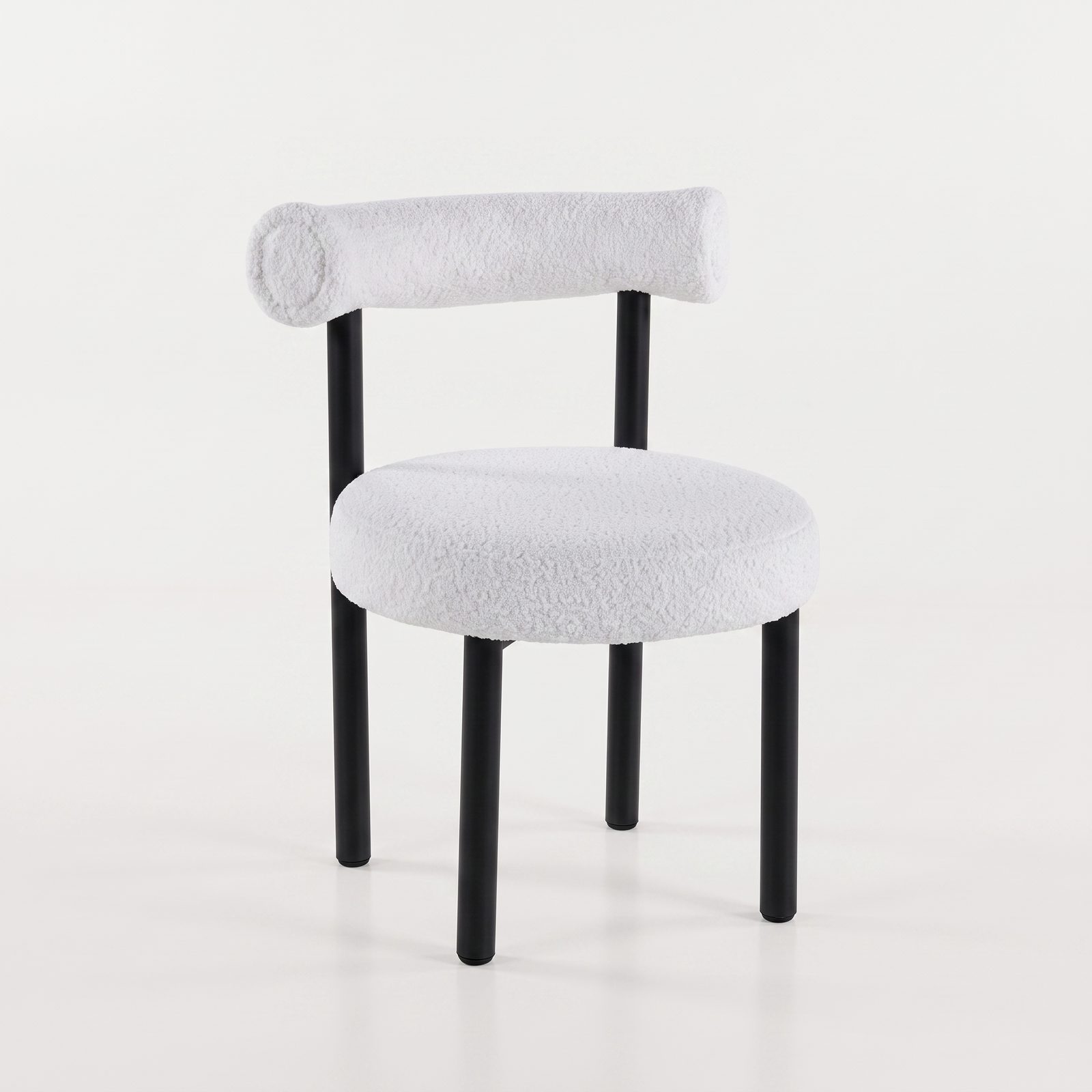
Sharp corners are out. Across European cafe design and now global hospitality, 2026 favors rounded chair backs, oval seats, and softened edges. The reasoning is part comfort, part psychology: curved furniture feels inviting, encourages guests to linger, and — critically for modern venues — photographs better for user-generated social content.
The challenge for manufacturers is that curves are harder to execute in metal than in wood. This is where robotic welding and laser cutting become a competitive advantage. Curved steel frame geometries that would be prohibitively expensive in manual fabrication become repeatable at scale on a modern production line. The result: chairs that look hand-crafted but carry the consistency of automated manufacturing.
3. Velvet and Performance Upholstery in Jewel Tones
For fine dining, lounges, and premium cafes, velvet upholstery in deep emerald, sapphire, and burnt orange is the dominant look of 2026. Velvet signals luxury without the cost of solid wood carving, and it photographs richly under warm restaurant lighting.
The catch: residential velvet stains and mats quickly in a commercial setting. The 2026 answer is commercial-grade performance velvet — stain-resistant, scratch-resistant, and cleanable without losing its sheen. When sourcing upholstered metal dining chairs, specify upholstery fabric rated for hospitality use (look for abrasion resistance measured in Martindale or Wyzenbeek cycles). A chair that looks identical in a showroom can survive 6 months or 6 years depending entirely on the fabric spec.
Our upholstered dining chair line accepts custom fabric specifications, including performance velvet and stain-resistant commercial weaves — meaning the visual trend and the durability requirement do not have to be a trade-off.
4. Powder Coating as a Design and Durability Feature
Color is no longer just about the fabric. In 2026, the metal frame itself is a color statement. Matte black, brushed brass, and warm bronze powder coatings define the chair’s character against the upholstery. But powder coating is also a protective specification: it is what stops a steel frame from rusting in a humid kitchen environment or chipping when chairs are stacked nightly.
This matters more than most buyers realize. Many suppliers outsource coating, which leads to inconsistent finish quality and batch-to-batch color drift across a large order. Before placing a 500-chair hotel order, ask your supplier where and how the coating is applied — a documented coating thickness in microns is the single best predictor of how a metal chair will look after two years of commercial use, and a factory that controls coating in-house can match a designer’s exact RAL color reference without relying on a third party’s schedule.
5. Commercial-Grade Durability Becomes Non-Negotiable
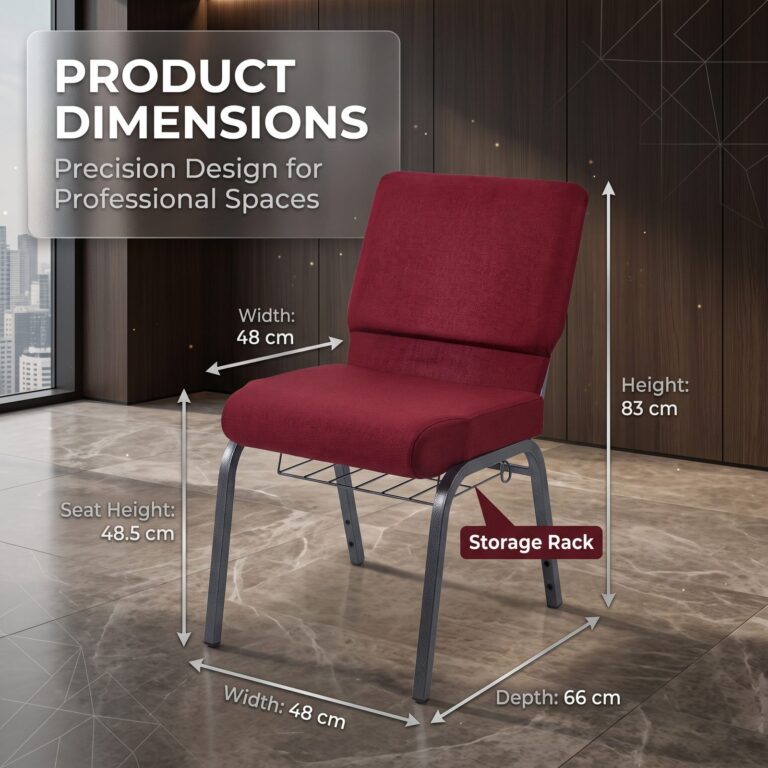
The most important trend of 2026 is not visual at all. After several years of operators learning expensive lessons, commercial-grade durability has moved from a “nice to have” to a hard procurement requirement. Hotel and restaurant buyers now ask about weld integrity, joint reinforcement, weight ratings, and foam density before they ask about color.
This is where the manufacturing story matters. A dining chair is only as durable as its weakest joint. Robotic welding produces consistent, penetration-controlled welds on every chair — the same weld on chair #1 and chair #500. Combined with laser-cut components (which hold tighter tolerances than stamped parts) and controlled finishing, the factory can engineer for long-term structural performance rather than hope for it.
For sourcing teams, the practical takeaway: request a sample, load-test the joints, and ask for the factory’s quality control documentation. A manufacturer that can show you its welding equipment, coating line, and tolerance specs is one that has engineered for durability.
How to Brief Your 2026 Dining Chair Order
If you are sourcing dining chairs for a restaurant, cafe, or hotel project this year, here is a quick specification checklist that aligns with the trends above:
- Frame: Welded steel, powder-coated. Confirm coating thickness and RAL color matching capability.
- Upholstery: Performance-rated fabric (ask for Martindale/Wyzenbeek cycles). Ensure seats are bolt-on and reupholsterable.
- Silhouette: Curved or organic back profile for guest comfort and social-media appeal.
- Consistency: Robotic welding and laser cutting for repeatable quality across large orders.
- Customization: Confirm the factory accepts low-MOQ custom specs — independent venues increasingly want brand-exclusive finishes without ordering 1,000 units.
Explore the Chairs That Match the 2026 Brief
- C-085 Upholstered Restaurant Side Chair
- C-090 Upholstered Restaurant Side Chair
- C-173 Upholstered Restaurant Side Chair
- C-182 Upholstered Restaurant Side Chair
- C-258 Upholstered Restaurant Side Chair
Browse the full commercial dining chairs collection, or send us your table heights, target quantity, and finish color — we usually reply within 24 hours with factory pricing and lead times via our contact page.
Summary: The 2026 Chair Is Metal Inside, Soft Outside
The chairs winning in 2026 hospitality venues are not purely wooden, purely metal, or purely upholstered — they are all three working together. A welded steel frame provides the lifespan, powder coating provides the color and protection, and performance upholstery provides the comfort and visual warmth guests photograph. For buyers, the trend is an opportunity to specify furniture that looks expensive, lasts for years, and can be refreshed fabric-by-fabric rather than replaced wholesale.
The suppliers best positioned to deliver this are those who control welding, cutting, and coating under one roof — because that vertical control is what turns a trend into a reliable, repeatable product.