Cafe Chairs Buying Guide: How to Choose Seating That Survives 12-Hour Days
Why cafe chairs are not just “dining chairs with a different label”
If you have ever run a busy cafe, you already know the difference. A home dining chair might look perfect in a showroom and fall apart in six months of commercial use. Cafe chairs get dragged across tile, stacked in corners, spilled on, leaned back, and used for ten to fourteen hours a day. The wrong chair costs you more in replacements, bad reviews, and lost seating days than it saves at checkout.
At Easy Furniture we manufacture cafe and commercial seating in Shengfang, Hebei, one of the densest furniture production clusters in northern China. We see the same pattern in every order: buyers who focus only on unit price usually reorder sooner than buyers who match the chair to the actual job it has to do.
This guide is written for the second group. Below is what we check when we spec chairs for a cafe, coffee shop, or casual restaurant.
1. Seat height first, style second
Before you fall in love with a frame shape, measure your tables.
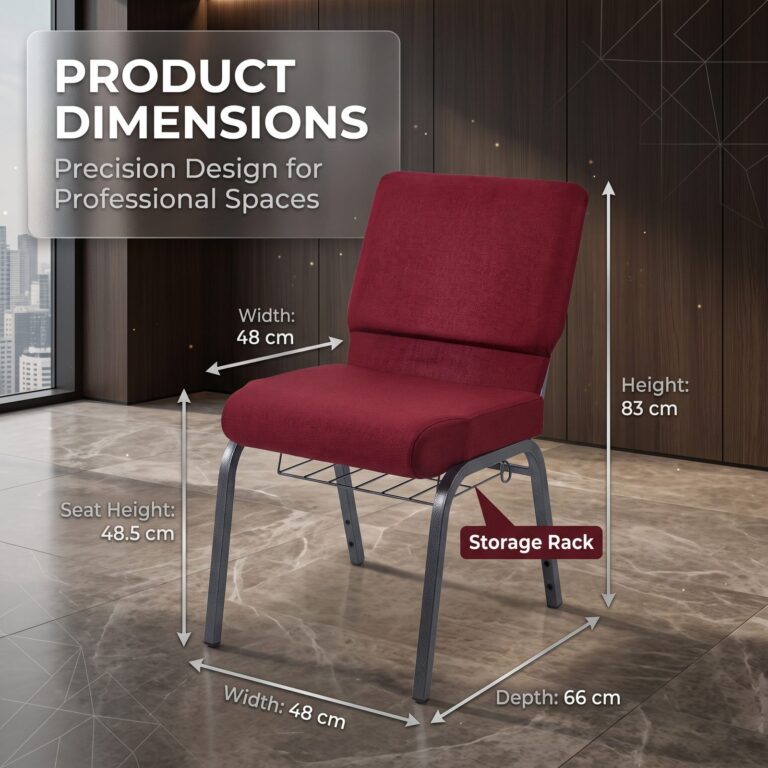
- Standard dining tables (72–76 cm / 28–30 in): seat height should be 43–48 cm (17–19 in). This covers most bistro and cafe tables.
- Counter-height tables (90–95 cm / 35–37 in): seat height 60–65 cm (24–26 in).
- Bar-height tables (105–110 cm / 41–43 in): seat height 73–78 cm (29–31 in).
A 2 cm difference in seat height changes whether a customer is comfortable for twenty minutes or two hours. If you run a cafe where people work on laptops for half the day, aim for the lower end of the range so elbows rest naturally on the table.
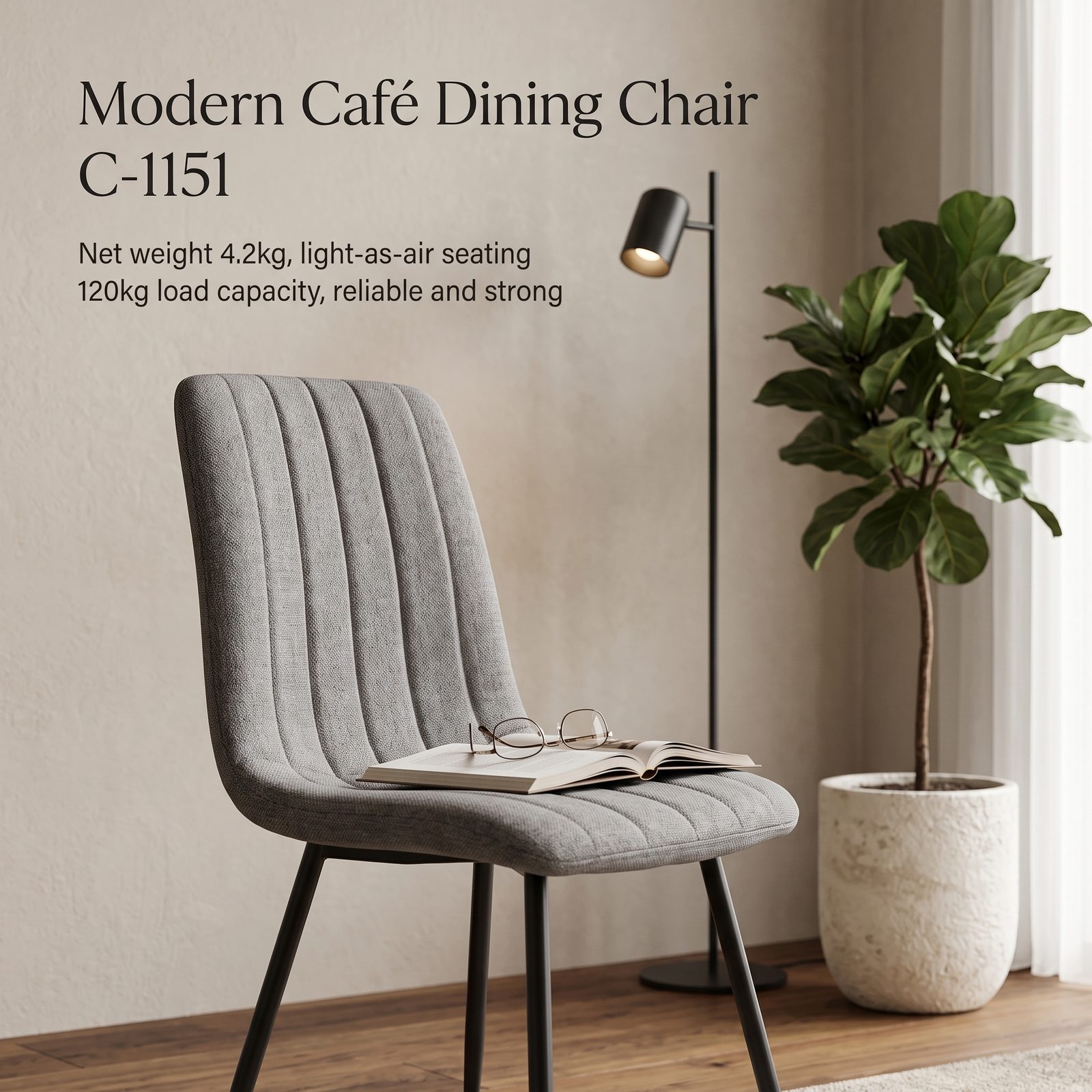
For standard-height cafe tables, our Modern Café Dining Chair C-1151 sits at a comfortable 45 cm seat height with a slightly contoured back that works for both quick coffee and longer stays.
2. Frame: steel or aluminum, and why wall thickness matters
Cafe frames take a beating. The two practical choices are steel and aluminum.
- Steel is stronger for the money and heavier, so chairs stay where guests put them. Look for 1.0–1.2 mm wall thickness on the main tubes. Thinner than 0.8 mm will bend at the joints within a year of daily stacking.
- Aluminum is lighter and does not rust, which is useful if your space is humid or near the sea. It costs more and flexes more under heavy guests, so we recommend it mainly for outdoor or semi-outdoor seating.
Finish matters as much as material. Powder coating is standard for cafe chairs; a proper line will apply epoxy-polyester powder at 60–80 microns and bake it. Cheap paint chips at the feet and armrests first. If you expect chairs to be stacked daily, ask the supplier for a stacking test report or at least photos after 500 stack cycles.
Our metal bistro chairs—C-202M, C-205, C-208, and C-210—use 1.0 mm steel tube frames with powder-coated finishes in black, white, and gunmetal. They are built for 120+ kg static load and daily stacking.
3. Upholstery: pick the surface that lives with coffee and ketchup
Fabric that looks beautiful in a catalog can be a nightmare after the first latte spill. In a cafe, upholstery has three jobs: clean easily, resist abrasion, and keep its color under fluorescent light.
Here is how the common options compare in real use:
- PU / vinyl: wipes clean, cheap, but cracks in cold or dry climates after 1–2 years. Best for high-turnover, budget-focused locations.
- Commercial-grade polyester / olefin: breathable, holds color, and resists stains better than home fabric. Look for Martindale abrasion test above 30,000 cycles.
- Velvet or thick weave: looks premium but traps crumbs and stains. Only choose it if your cleaning crew is thorough and your turnover is moderate.
Foam density is the hidden spec. Domestic chairs often use 25 kg/m³ foam that goes flat in months. For cafe seating, insist on 35–45 kg/m³ high-resilience foam. It costs a little more but keeps its shape through thousands of sits.
4. Stackability and weight: the logistics nobody thinks about until moving day
A cafe chair that stacks 8–10 high can turn a storage room from a problem into an asset. This matters for:
- Events and private parties
- Floor cleaning
- Seasonal layout changes
- Delivery and setup at multi-location chains
Ideal single-chair weight is 4.5–6.5 kg. Lighter than 4 kg usually means a weaker frame; heavier than 8 kg becomes tiring for staff to move in batches. Ask your supplier for the stacking height and whether the feet have protective glides so stacked chairs do not scratch each other.
For venues that need padded, stackable seating, our C-601 and C-605 banquet chairs stack 8–10 high and work well in multi-purpose cafe event spaces.
5. Match the chair to your brand, not just the room
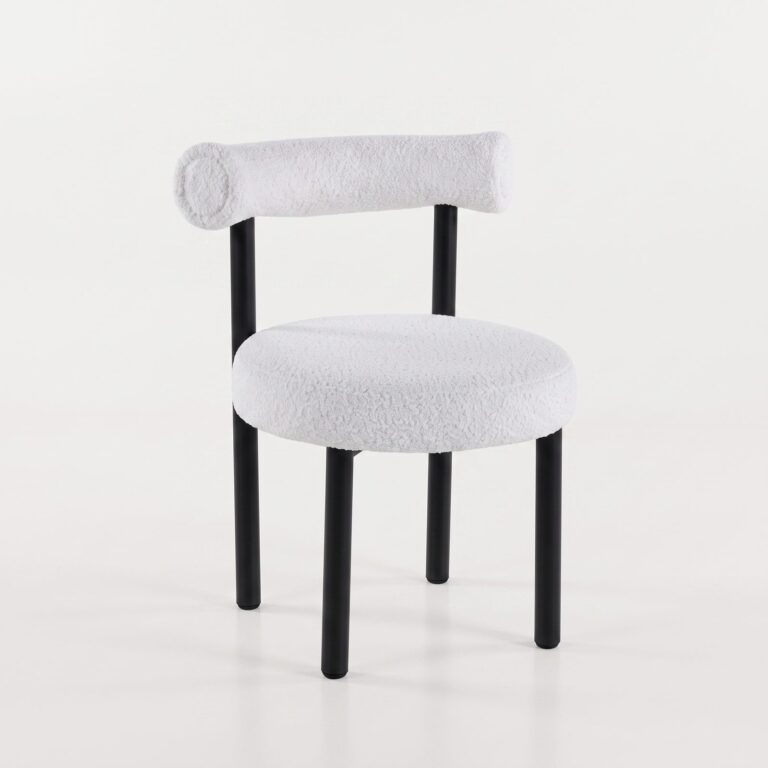
Every chair sends a signal. A matte-black metal bistro chair says urban and fast. A warm wood-look seat with a curved back says neighborhood and stay awhile. A fully upholstered chair says premium menu and longer check averages.
One mistake we see often: mixing too many styles in one room. Two complementary chair models are usually enough—one for standard tables and one for counter or bar seating. If you want visual variety, change the finish color or the upholstery, not the silhouette.
If your brand is modern cafe or fast-casual, the C-1151 is a safe anchor: clean lines, compact footprint, and a price point that works for volume orders.
6. Budget reality check: what a decent cafe chair should cost
Factory pricing for commercial cafe chairs in China generally falls into these bands, FOB basis:
- $12–$20: basic metal or plastic chair, short lifespan, best for tight budgets or temporary pop-ups.
- $22–$38: solid metal frame, commercial foam, decent powder coat. This is the sweet spot for most independent cafes.
- $40–$70: premium materials, thicker steel, custom upholstery, stronger warranty.
MOQ usually starts around 50 pieces per model for customized orders, or 100–200 pieces for standard catalog items. If a supplier quotes below $10 with free customization, ask what they removed to get there.
Quick checklist before you place a cafe chair order
- Seat height matches 90% of your tables
- Frame wall thickness ≥ 1.0 mm steel or equivalent aluminum
- Powder coat thickness ≥ 60 microns
- Upholstery Martindale ≥ 30,000 cycles (if fabric)
- Foam density ≥ 35 kg/m³
- Stackable to at least 8 chairs
- Single-chair weight 4.5–6.5 kg
- Static load rating ≥ 120 kg
- Glides or floor protectors included
FAQ
What is the best seat height for a standard cafe table?
For tables 72–76 cm high, choose a seat height of 43–48 cm. The most common spec we ship is 45 cm.
How many cafe chairs should I stack for storage?
Most commercial models stack 8–10 chairs. Always confirm the exact stacking number with the factory and ask whether the feet have glides to avoid frame scratching.
Are metal cafe chairs comfortable for long stays?
With the right seat shape and foam, yes. Look for ergonomic back curvature and foam density of 35 kg/m³ or higher. For customers staying over an hour, add an upholstered seat.
What upholstery is easiest to clean in a cafe?
PU or vinyl wipes clean fastest, but commercial polyester/olefin is more durable and breathable. Avoid thick weaves and velvet unless cleaning is frequent and thorough.
What MOQ should I expect for custom cafe chairs?
Standard catalog items often require 100–200 pieces. Custom colors, upholstery, or small logo plates usually start at 50 pieces per model.
Need a quote for your cafe project?
Browse our full Cafe & Commercial Chairs collection or send us your table heights, target quantity, and finish color. We usually reply within 24 hours with factory pricing and lead times.