GulfHost 2026: Banquet Seating Checklist for MENA Buyers
First, What GulfHost Is — and Is Not
GulfHost opens at Dubai World Trade Centre on 3 November 2026 for three days, in Zabeel Hall 6. It is the region’s foodservice equipment exhibition, now in its sixth edition, and this year it runs alongside Gulfood Manufacturing, ISM Middle East and Private Label Middle East — a combined platform of more than 2,500 exhibitors and 80,000 trade professionals.
Furniture is not the centre of the show. It sits within the tableware and furnishings segment, next to buffetware and linen. So if you are sourcing banquet chairs, the reason to attend is the buyer traffic — F&B directors, procurement teams and hotel groups — and the conversations that begin with a kitchen and end with a ballroom. Treat the fair as a place to meet the people who specify, not a place to compare chair ranges.
The Demand Behind the Diary
The numbers explain why seating projects keep appearing on Gulf procurement desks. MENA’s hospitality market was estimated at $310 billion in 2025 and is forecast to exceed $487 billion by 2032, while the region’s foodservice market is projected to grow at 8.41% a year through 2032. New hotel keys and refurbishment cycles both consume chairs, and a high-turnover ballroom typically replaces or re-covers its seating every five to eight years.
For a supplier, that combination produces a specific kind of enquiry: not one banquet hall, but a portfolio of them, ordered in phases and expected to look identical three years later.
Specification One: Heat and Humidity Attack Adhesives First
Upholstery fails in the Gulf in a different order than in Europe. Foam does not usually collapse first; the bond between foam and shell does. Coastal warehouses run at 60–90% relative humidity for much of the year, and a chair stored without air conditioning through a summer will find any weak adhesive.
Ask for foam density by layer (40–55 kg/m³ for contract banquet seating), water-based or high-solids adhesive systems rather than solvent shortcuts, and a powder coating line with proper pre-treatment — degreasing, rinsing and a conversion layer before the powder goes on. Un-treated welds rust from the inside out, and by the time a rust line shows at a joint, the frame is already compromised.
Specification Two: A Ballroom Is Three Rooms a Week
Multi-purpose venues in the region turn over faster than almost anywhere else: a wedding on Thursday, a conference on Saturday, a gala on Monday. Specify stack count as a tested number with a column height, not as the word “stackable”. Steel-framed padded banquet chairs commonly stack 8 to 12 high; 6 to 8 is the practical figure where staff handle them daily.
Then check the building, not just the chair: ceiling clearance above the column, the service-lift opening, the width of the store-room door and the turning circle at its entrance. A trolley that carries 12 to 20 chairs is only useful if it fits the route it has to travel.
Specification Three: Fabric Has to Survive Banquet Service
Gulf ballrooms favour light, warm neutrals — champagne, ivory, sand, gold — which is also the palette that shows every mark. Two numbers matter more than the colour card: Martindale abrasion (30,000 cycles is a reasonable contract floor, 40,000+ for heavy use) and whether the cover carries a stain-repellent finish that survives cleaning.
Ask what happens in year three, not year one. Can the covers be removed and replaced without re-upholstering the chair? Are spare covers available in the original dye lot, or only in the current season’s? For phased hotel rollouts, order 5–8% spare covers with the chairs; matching a champagne velvet two years later is rarely possible.
Specification Four: Fire Performance in Writing
Fire requirements for upholstered seating in the Gulf are set by the project’s consultant and insurer rather than by a single regional code, and they vary by building type. BS 5852 and EN 1021 are the standards most often cited for hospitality seating; international hotel brands sometimes specify CAL 117 for US-origin programmes.
What matters commercially is the test report: it must cover the exact foam and cover combination you are buying, not a generic “fire-retardant foam” claim. A supplier who cannot produce a report for the combination on the quotation is asking you to carry the risk. Our upholstery compliance guide explains how the standards differ and what documentation to request.
Specification Five: The 40HQ Sum
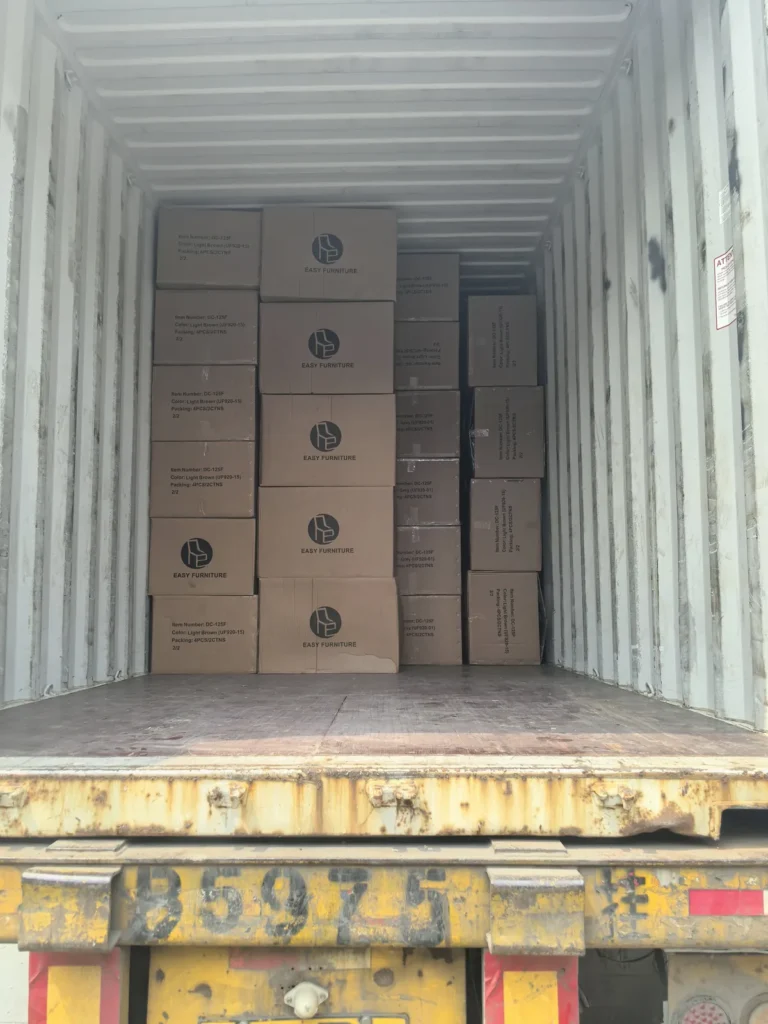
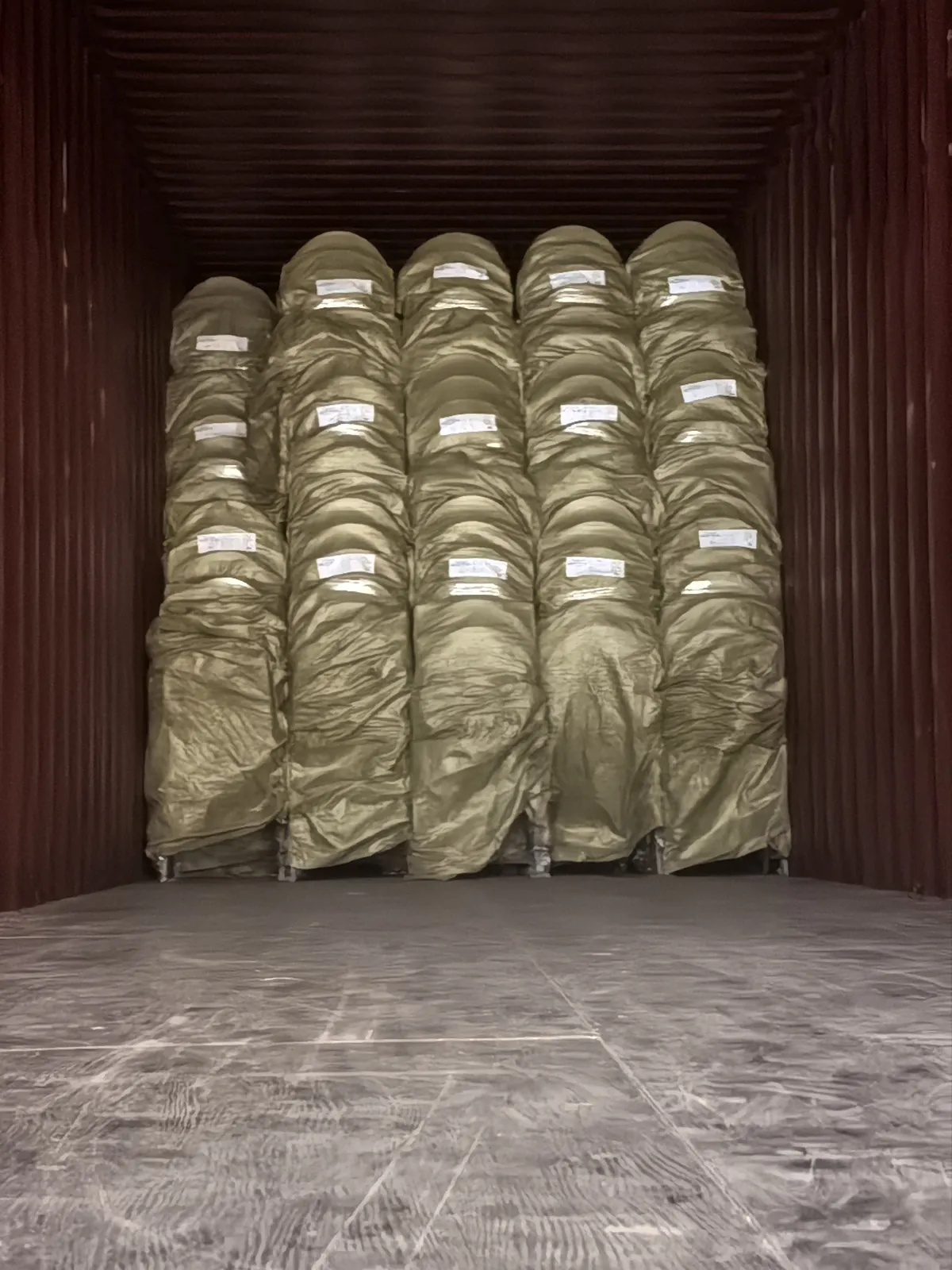
Container maths decides the landed cost of a banquet programme, and it is simple arithmetic once you have one number: packed volume per chair. A 40HQ gives roughly 65–68 m³ of usable space. At 0.12 m³ per chair that is about 550 chairs; at 0.09 m³ it is closer to 720.
Ask for the packed volume and carton dimensions rather than a chair count per container, then add 5% for packaging variance and any pallet requirement at destination. Our Q4 procurement timeline sets out how loading dates interact with production and freight schedules.
The RFQ Checklist for MENA Projects
- Tested stack count, column height and load rating per column
- Foam density by layer, and the adhesive system used
- Frame wall thickness, weld process and coating pre-treatment
- Martindale cycles for the exact cover, plus stain-finish details
- Fire test report for the foam and cover combination
- Removable cover system and spare-cover availability
- Stocked glides, feet and touch-up paint
- Packed volume per chair and carton dimensions
- Sample lead time and production lead time, stated separately
- Re-order lead time for a single replacement chair after three years
Where Easy Furniture Fits
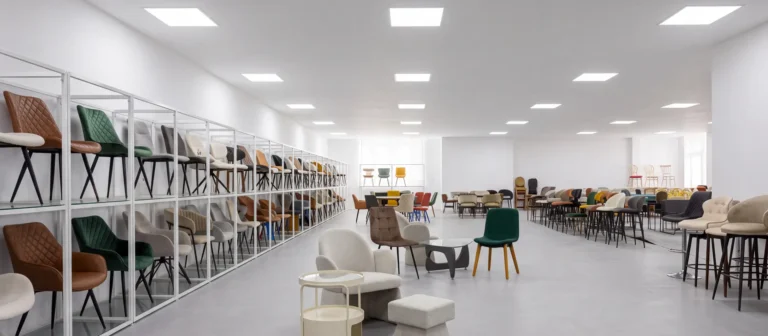
We manufacture upholstered banquet chairs, commercial dining chairs and bar stools in Shengfang, Hebei — 10,000 m² of production across two lines, with our own laser cutting, robotic welding, powder coating and sewing. Monthly capacity is 33 x 40HQ containers, and we ship regularly to Korea, the EU and Southeast Asia.
We are not exhibiting at GulfHost. If you are buying for a MENA project, the useful conversation happens before the specifications are fixed: send a room plan, a seat count and the fire standard your consultant requires, and we will quote stack count, foam density, packed volume and a phased delivery plan. Request a quotation, or browse the Arabic range of banquet chairs.
Frequently Asked Questions
Is GulfHost a furniture exhibition?
No. It is a hospitality and foodservice equipment show. Furniture appears within the tableware and furnishings segment, so buyers sourcing banquet seating attend for the hotel and F&B audience rather than a dedicated chair hall.
How long does a hotel seating order take to reach the Gulf?
Plan on 30–45 days of production after sample approval, plus three to four weeks of sea freight to Jebel Ali and about a week for customs and inland delivery. Orders that must be installed before a season should be confirmed at least three months ahead.
Which fire standard applies to hotel banquet chairs in the UAE?
There is no single answer — it is set by the project’s consultant and insurer. BS 5852 and EN 1021 are the most frequently cited for upholstered seating in the region; some international brands specify CAL 117. Ask for a test report covering the exact foam and cover combination you are buying.